If you were at Monday’s Family Formation meeting last week, you know that there was no time for me to do my monthly Home Lesson update for parents because we just had too many other good things to do. The tragedy of this (although possibly only from my own perspective), was that I did not get time to encourage all of you to set everything else aside and order your Triduum around going to as many liturgies as you can. They are all fantastic, beautiful, ancient, symbolic celebrations of the core teachings of our Faith. They are filled with enough drama to keep all but the sleepiest toddlers awake and alert and I highly encourage you to attend as many as possible. Having said that, here’s an overview:
This week’s lesson on the Triduum is Family Formation’s annual reminder to you all of just what is happening during the highest holy week of the entire liturgical year. The Triduum (Latin for “three days”) is Holy Thursday, Good Friday, and Holy Saturday (up to the Easter Vigil Mass).
 THURSDAY: Your bishop is celebrating the annual Chrism Mass on Holy Thursday where he consecrates the holy oils used for the celebration of the sacraments for the upcoming year. It’s a beautiful Mass at the cathedral and typically priests from every parish in the diocese are present to renew their ordination commitments. (NOTE: While this Mass is traditionally held on Holy Thursday, it is occasionally scheduled on another day for various reasons.)
The Mass of the Last Supper is offered in the evening on Holy Thursday. At this time we celebrate the institution of the Holy Eucharist, the institution of the priesthood, and Christ’s call to service and charity as He washed the feet of his disciples. Enough hosts are consecrated at this Mass for use at the Good Friday service (more about that below). At the conclusion of this Mass the altar is stripped of it’s cloth and the Blessed Sacrament is moved to a place of repose up until midnight for Adoration.
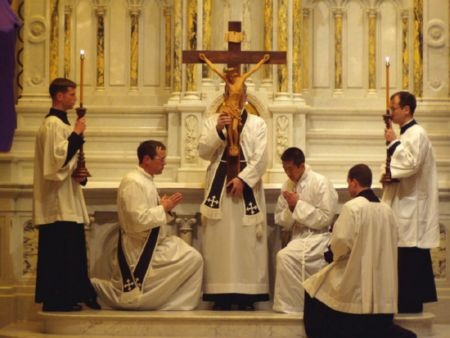 FRIDAY: Good Friday is the only day of the entire year where Mass is not celebrated (nor will there be until the Vigil Mass on Saturday). When you go to church on this day, it will be to a liturgy called The Celebration of the Lord’s Passion. Watch carefully and you’ll notice your priest does not consecrate the Eucharist. Instead you’ll see the liturgy of the Word, veneration of the cross, and can receive Holy Communion with the extra hosts which were consecrated the day before.
Because Jesus was on the cross from the hours of noon until 3:00, these hours are considered the most solemn and sacred of all. Most parishes will offer some kind of additional prayer to commemorate this time.
SATURDAY: Holy Saturday is a time of solemn waiting and again, there will be no Mass offered until Easter Vigil sometime after sundown.
The word vigil is from the Latin for awake and in general is a watch on the evening of any religious feast. Easter Vigil is the holiest Mass of the Church Year and while you’ll recognize all the parts of a regular Mass, it is filled with ancient symbolism and drama that we only see on this one day each year!
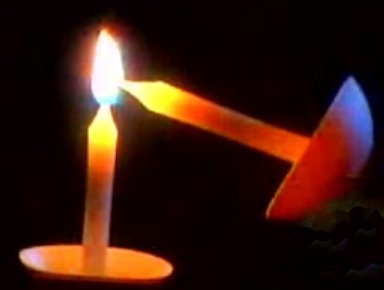 It’ll begin with the Service of Light where a fire is blessed which then lights the new Easter candle. This candle is carried in procession through the church where three times the priest or deacon pauses and sings “Christ our Light” and we all answer “Thanks be to God!” The exultet is sung and then we begin a liturgy of the Word recalling the amazing story of salvation history with seven readings.
Those who have been preparing to join the Church are Baptized and Confirmed, and then we celebrate the liturgy of the Eucharist for the first time since Holy Thursday. The new Catholics receive their first Holy Communion. And we’re all dismissed with joyful Alleluias!
 Family Formation