Whether you choose to go trick-or-treating in your neighborhood or participate in an All Saints’ celebration at your parish, we have some easy costume ideas to be a witness to the Faith.
Every saint picture has some kind of attribute. For example, in religious art Mary is often wearing blue, someone known for purity may be carrying lilies, a martyr may be carrying the instrument of his or her death. These elements not only help us identify the person pictured, but they teach us something about them. You can start with some basic foundation pieces and then add the right attributes/props to make your character recognizable.
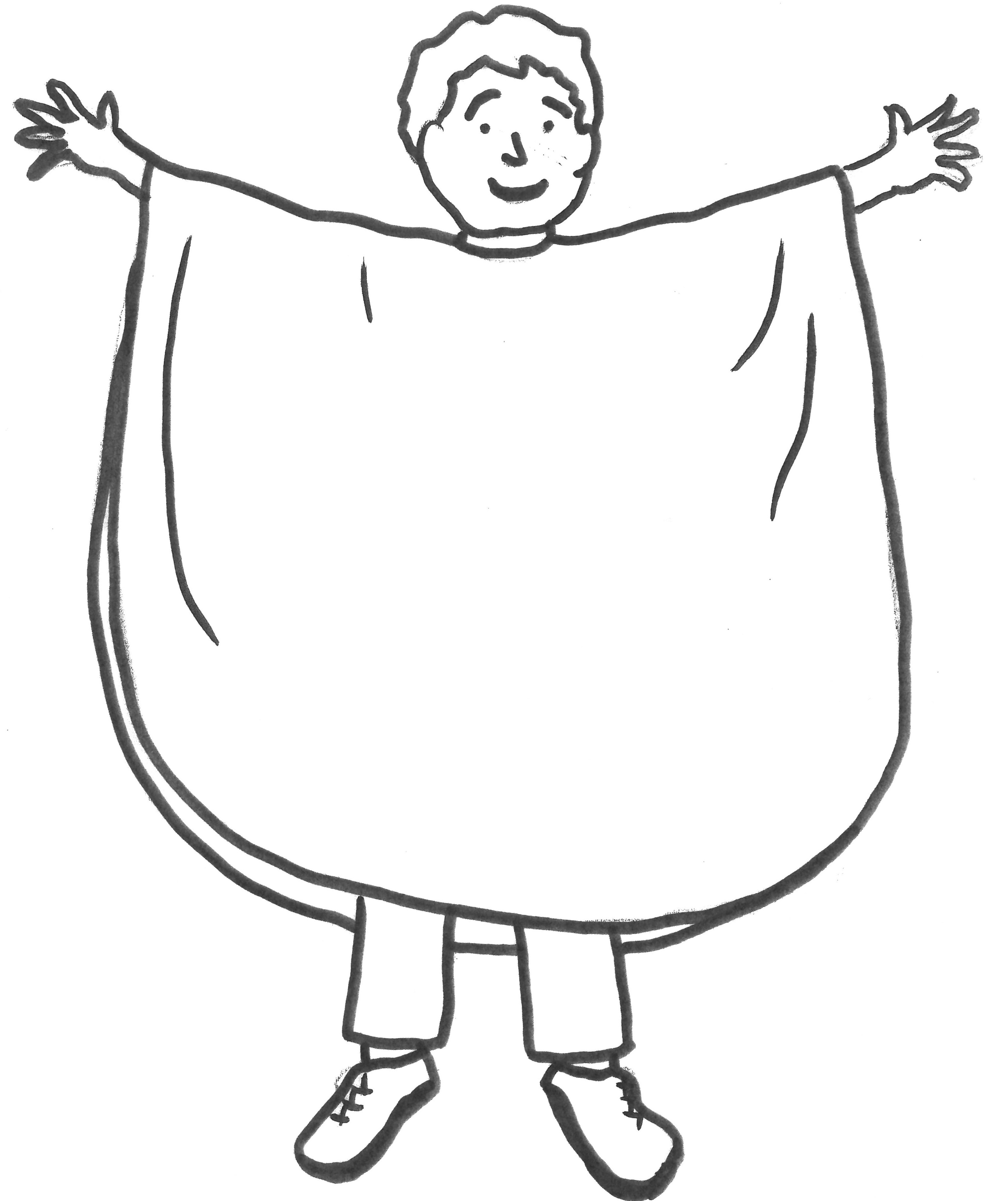
TUNICS: an essential for many biblical costumes. For small children, a large T-shirt can serve this purpose. For the “big” kids, all you need is a piece of fabric with a hole in the center for the head. Most 45 or 60-inch fabrics will work fine without finishing the edges, but if you find that the edges start to fray too much, you can sew a hem or apply a product such as Fray Check. To determine the length of fabric needed, measure from the shoulders down to where you want the tunic to end, and multiply by two. Then, simply cut either a hole or a straight line in the center of the fabric, large enough to fit over the child’s head. (Note: Start by cutting it smaller than you think is necessary. It is always easy to make it just a little bigger.) Add a belt and the costume is complete. The tunic is a simple start to dressing as women, disciples, shepherds, kings, etc. Props are what will make the difference that distinguishes one saint from another.
PROPS: Add a bathrobe for an extra layer. Fabric (or scarf or pashmina) draped over a tunic becomes a cloak, sash, cape, etc. Add crowns for kings and queens, a fishing net for fisherman, a staff or sling for shepherds, a hammer and smock for carpenters, rope or twine for belts or waist ties. A pope’s hat can be made out of a sheet of tagboard, Saint Therese will carry some silk roses, Saint Dominic needs a rosary, Saint Francis can use some small stuffed animal friends (as can Noah),
PRIESTS/MALE SAINTS: A white shirt worn backwards with a dark jacket or sweater and pants makes a perfect “base” for a priest or male costume. A Bible or a saint’s symbol (look online at Catholic encyclopedias for the symbols of specific saints) can complete the look. A plain dark robe tied at the waist creates an instant Saint Francis or Saint Thomas Aquinas.
FEMALE SAINTS: A brightly patterned, gathered skirt with a large shawl wrapped over the shoulders, crossed over the chest, and tucked into the skirt is the start for the look of many female saints. Pull your hair back into a bun, and you have got little girl saints such as Saints Bernadette, Maria Goretti, etc. Using the same skirt and shawl and adding a lace shawl as a head covering helps you easily create Saint Monica, Saint Rita, or any of the medieval queens that became saints.
EARLY CHRISTIAN MARTYRS: Make a white tunic using an old bed sheet, and tie a long sash around the waist to portray a martyr. Purchase silk ivy to create a crown for the head. Wear a longer tunic for girls, e.g. Saint Lucy, Saint Felicity, etc. For boys, the tunic should be shorter (to the knee) to signify Saint Germanicus or other male martyrs. Saint Sebastian could carry a handful of arrows.
Whoever you choose, start by looking up a picture, learn more about this saintly person, and then have fun pulling together your costumes!
 Family Formation